How to Ship Goods via Container in 2025 for Maximum Efficiency and Cost Savings
In the evolving landscape of global trade, shipping via container has emerged as a cornerstone of logistics, driving efficiency and cost savings for businesses worldwide. According to the International Chamber of Shipping, approximately 80% of global merchandise trade by volume is carried by sea, with container shipping responsible for a significant portion of this flow. The demand for containerized transport is projected to grow, necessitating innovative strategies that enhance operational efficiency while mitigating environmental impact.
With the shipping industry projected to expand at a compound annual growth rate (CAGR) of 3.5% from 2022 to 2027, stakeholders must adopt best practices for shipping via container to remain competitive. This includes leveraging advanced technologies such as automation and data analytics to optimize routing and reduce transit times. Furthermore, embracing sustainability initiatives will not only improve cost structures but also align with rising regulatory requirements and consumer consciousness regarding environmental stewardship. By implementing these strategies, businesses can navigate the complexities of container shipping in 2025 and beyond, achieving maximum efficiency and cost savings while responding to an increasingly dynamic market landscape.

Understanding Container Shipping Logistics in 2025
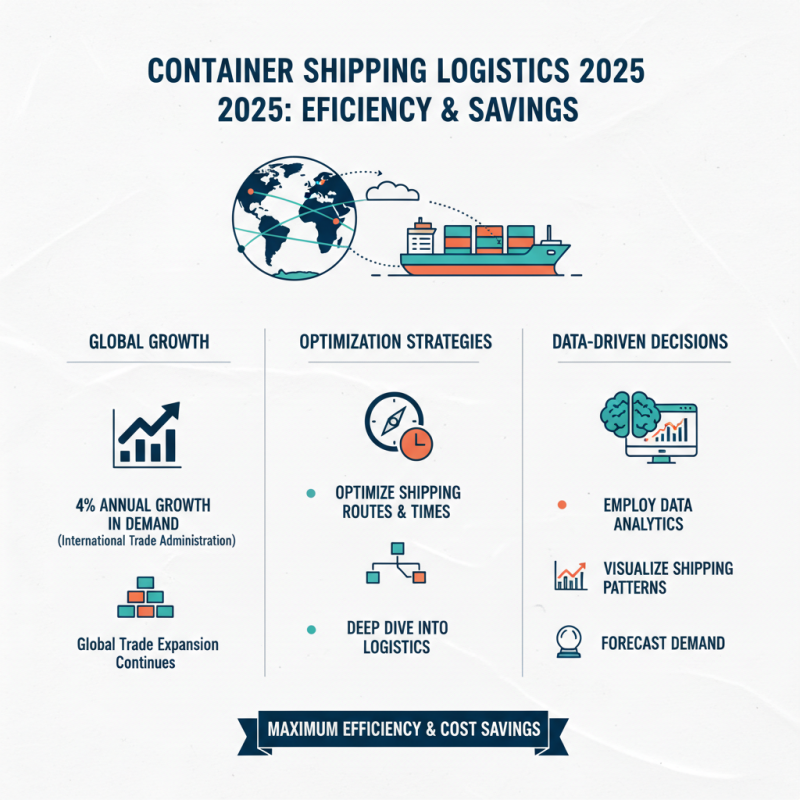
In 2025, understanding container shipping logistics is pivotal for businesses aiming for maximum efficiency and cost savings. As global trade continues to expand, the demand for container shipping is projected to increase by approximately 4% annually, according to the International Trade Administration. This growth necessitates a deep dive into logistics strategies that optimize both shipping routes and times. Employing data analytics to visualize shipping patterns and forecast demand can significantly enhance operational efficiency, allowing companies to make informed decisions about when and where to ship.
Moreover, technological advancements such as automated port operations and AI-driven supply chain management systems are revolutionizing logistics. The World Economic Forum highlights that adopting these technologies could reduce logistics costs by up to 10% by 2025. Furthermore, the efficient use of container capacities is essential; the Global Shipping Report indicates that maximizing container utilization can lead to a 15% reduction in per-unit shipping costs. By leveraging these insights and technologies, businesses can not only streamline their container shipping processes but also achieve substantial savings in logistics costs.
Choosing the Right Container Type for Optimal Efficiency
Selecting the right container type is crucial for achieving optimal efficiency in shipping goods via container. In 2025, businesses will need to consider several factors, including the nature of the products being shipped, transportation routes, and environmental considerations. Standard shipping containers, such as 20-foot and 40-foot containers, are versatile and widely used for general cargo. However, for goods that require specific conditions, such as temperature control or extra protection, specialized containers such as refrigerated containers or flat racks may be necessary. By choosing the appropriate container, shippers can minimize risks associated with damage and spoilage, ensuring that goods arrive at their destination in excellent condition.
Additionally, understanding the logistics of loading and unloading is essential for maximizing efficiency. Containers that are designed for easy access or have features that facilitate faster handling can significantly reduce turnaround times at ports. Furthermore, considering the weight and volume capacity of different container types can lead to better space utilization, allowing businesses to optimize their shipping costs. As the industry evolves, employing advanced container technologies, such as collapsible designs or innovative materials, could provide further savings and efficiency. Making informed choices in container selection not only enhances operational effectiveness but also contributes to sustainability in shipping practices.
How to Ship Goods via Container in 2025 for Maximum Efficiency and Cost Savings - Choosing the Right Container Type for Optimal Efficiency
| Container Type |
Dimensions (L x W x H in meters) |
Max Weight (kg) |
Volume (m³) |
Typical Cargo |
| 20 ft Standard |
6.06 x 2.44 x 2.59 |
22000 |
33.2 |
General Cargo |
| 40 ft Standard |
12.19 x 2.44 x 2.59 |
30000 |
67.7 |
General Cargo |
| 40 ft High Cube |
12.19 x 2.44 x 2.89 |
30000 |
76.4 |
Bulk Materials |
| Reefer Container |
12.19 x 2.44 x 2.59 |
30000 |
67.7 |
Perishable Goods |
| Flat Rack |
12.19 x 2.44 x 0.6 |
30000 |
76.4 |
Heavy Machinery |
Best Practices for Packing Goods in Containers
When packing goods in containers for shipping, efficiency and safety are paramount.
To maximize space and reduce costs, begin by choosing the right size and type of container that aligns with your cargo specifications.
Ensuring the container is suitable for the type of goods being shipped—whether dry, refrigerated, or hazardous—is vital for preventing damage and maintaining the integrity of the items during transport.
Next, focus on effective packing techniques.
Utilize pallets to facilitate easier loading and unloading, and to keep goods off the container floor, shielding them from moisture.
Spread the weight evenly throughout the container, placing heavier items at the bottom and lighter ones on top to create a stable load that minimizes shifting during transit.
Additionally, employ padding materials, such as bubble wrap or foam, around fragile items to mitigate the risk of breakage.
Sealing boxes tightly not only helps with organization but also prevents any unwanted movement that can lead to damage.
Finally, labeling and documenting the contents accurately is essential for both logistical efficiency and compliance with shipping regulations.
Clear labels should indicate the handling instructions, ensuring that those involved in the shipping process understand the proper care required for each type of cargo.
This meticulous approach to packing will not only enhance shipping efficiency but also contribute to significant cost savings.
Navigating Shipping Regulations and Compliance in 2025
Navigating shipping regulations and compliance in 2025 is crucial for businesses looking to maximize efficiency and cost savings in container shipping. As global trade continues to evolve, understanding the regulatory landscape becomes essential. In 2025, it's important to stay updated on changes in customs regulations, environmental standards, and digital documentation requirements. Companies must ensure that all shipments comply with international laws to avoid costly delays and penalties.
Tips for successful compliance include regularly reviewing customs requirements and engaging with compliance experts who can help interpret regulations specific to your shipping routes. Additionally, investing in technology to automate documentation processes can significantly reduce human errors and streamline operations. Make it a practice to conduct periodic audits of shipping practices to ensure alignment with current legal standards and to identify potential areas for improvement.
Another vital strategy is to establish strong relationships with logistics and freight forwarding partners. These partners can provide essential insights into the latest compliance trends and help ensure that your shipments meet all necessary regulations. By fostering a collaborative approach to regulatory adherence, businesses can navigate complexities more effectively, enabling smoother shipping operations in a rapidly changing environment.
Shipping Costs and Transit Times for Different Container Sizes in 2025
This chart illustrates the estimated shipping costs and average transit times for 20ft and 40ft containers in 2025. The data reflects trends in global shipping, taking into account shipping regulations and compliance standards expected in that year.
Strategies for Reducing Costs and Increasing Shipping Efficiency
In 2025, maximizing efficiency and cost savings in container shipping requires a strategic approach that focuses on reducing expenses while enhancing operational effectiveness. One key strategy is adopting advanced technologies such as real-time tracking systems and automated inventory management. By utilizing these technologies, businesses can gain greater visibility over their supply chain, allowing for proactive decision-making that minimizes delays and optimizes resource allocation. Furthermore, predictive analytics can help companies forecast demand more accurately, ensuring that containers are filled to capacity and that shipping routes are optimized to reduce fuel costs.
Another effective strategy involves consolidating shipments to take advantage of economies of scale. By coordinating with other businesses to share container space, companies can significantly lower shipping costs while reducing their carbon footprint. This collaborative approach not only fosters better relationships within supply chains but also enhances reliability and frequency of shipping options. Additionally, investing in training for shipping personnel can lead to improved handling processes and increased awareness of cost-saving practices, ultimately leading to further efficiencies in container shipping operations.